Southampton & Surrounding Areas


Level 3 Horticulture Qualified


RHS Wisley
Trained
Stone Masonry
Natural stone construction in a Southampton garden is judged on whether it lasts as much as how it looks on the day it is finished. Heavier, wetter soils in lower lying areas near the river corridors put real pressure on any structure built into the ground, and the wet and dry cycle that comes with the city's maritime climate works on mortar joints year after year. Stone masonry from Edens Edge landscaping is built on Level 3 construction qualifications, with foundations and finishing specified for the conditions, not just for the day of completion.

Stone Walls, Piers and Boundary Features
Steps and Coping in Natural Stone
Foundations Specified for Your Ground
Garden Trouble? Let Us Help.
Best Price Guarantee
Every Project Tailored To You
A stone wall, pier or set of steps built from natural stone has a character that other materials cannot replicate, and in many Southampton gardens it suits the property far better than block or concrete. But natural stone construction is unforgiving of shortcuts. Inadequate foundations show themselves through movement and cracking faster in stone than in more flexible materials, and joints that are not finished correctly let water in, which Southampton's repeated wet and dry seasonal cycle then works on every year. Stone masonry from Edens Edge landscaping is approached as structural work first, with the foundation and drainage decisions made for the actual ground conditions before the stone goes in.
Does Your Stonework Need Attention?
Signs Your Southampton Garden Needs Stone masonry
The clearest sign is an existing stone wall, pier or step structure where the mortar joints have failed in multiple places, where individual stones have shifted out of alignment, or where the whole structure has begun to lean. Natural stone construction relies on the mortar bond and the foundation beneath it to hold the individual stones in their correct position. Once joints begin to fail, water gets behind the stones, and in Southampton's climate that water sits through the wet months and accelerates further movement. In lower lying gardens near the Itchen and Test corridors, where the ground beneath such structures can be saturated for extended periods through winter, this process moves faster than it would on freer draining ground. A structure showing this kind of failure needs to be assessed at the foundation level. Repointing alone will not address movement that originates below the visible structure.
The second sign is a garden where there is an existing area of informal or deteriorated stonework, an old dry stone retaining feature, a collapsed pier, or loose stone that was never properly set, that is no longer doing the job it was meant to do. This is common on older Southampton properties where stone features were built at some point in the property's history without modern foundation standards, and have gradually moved and loosened over decades. Rebuilding these features correctly, with a proper concrete or compacted aggregate foundation beneath the stone and correctly bonded and pointed joints above, gives a structure that holds rather than one that continues the slow deterioration the original feature was already experiencing.
The third sign is a garden where new stonework is wanted as part of a wider project, a boundary wall, a set of steps connecting level changes, stone piers either side of an entrance, or coping on top of an existing wall, and the owner wants the result to integrate with the character of the property. Many of Southampton's period properties, particularly in established areas like Bitterne Park and the older parts of Bassett, have existing stone or brick features that natural stone additions need to complement. Stone masonry that is planned alongside the existing materials and built on a foundation specified for the site produces a result that looks like it belongs rather than an addition that sits awkwardly against what is already there.
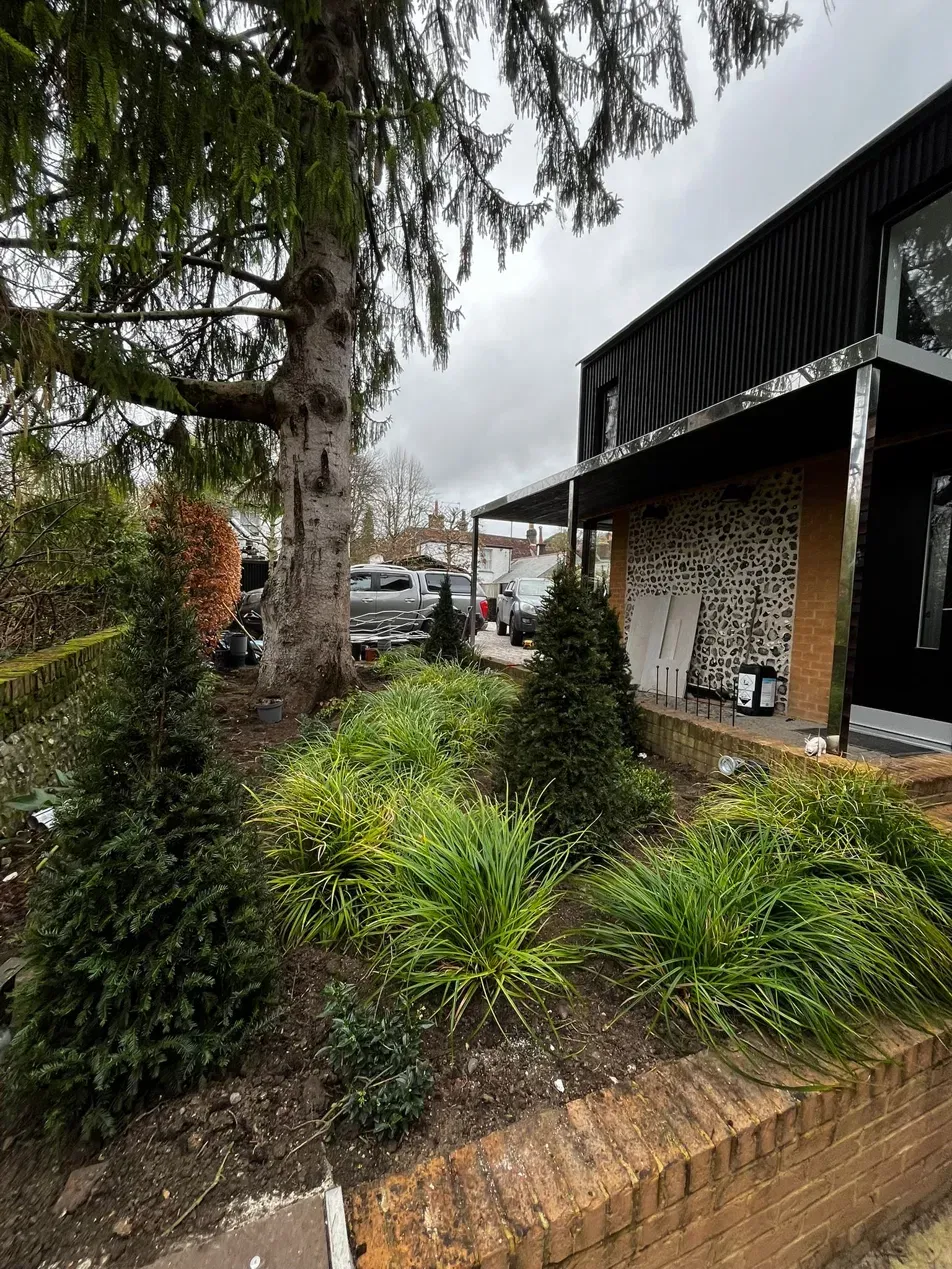
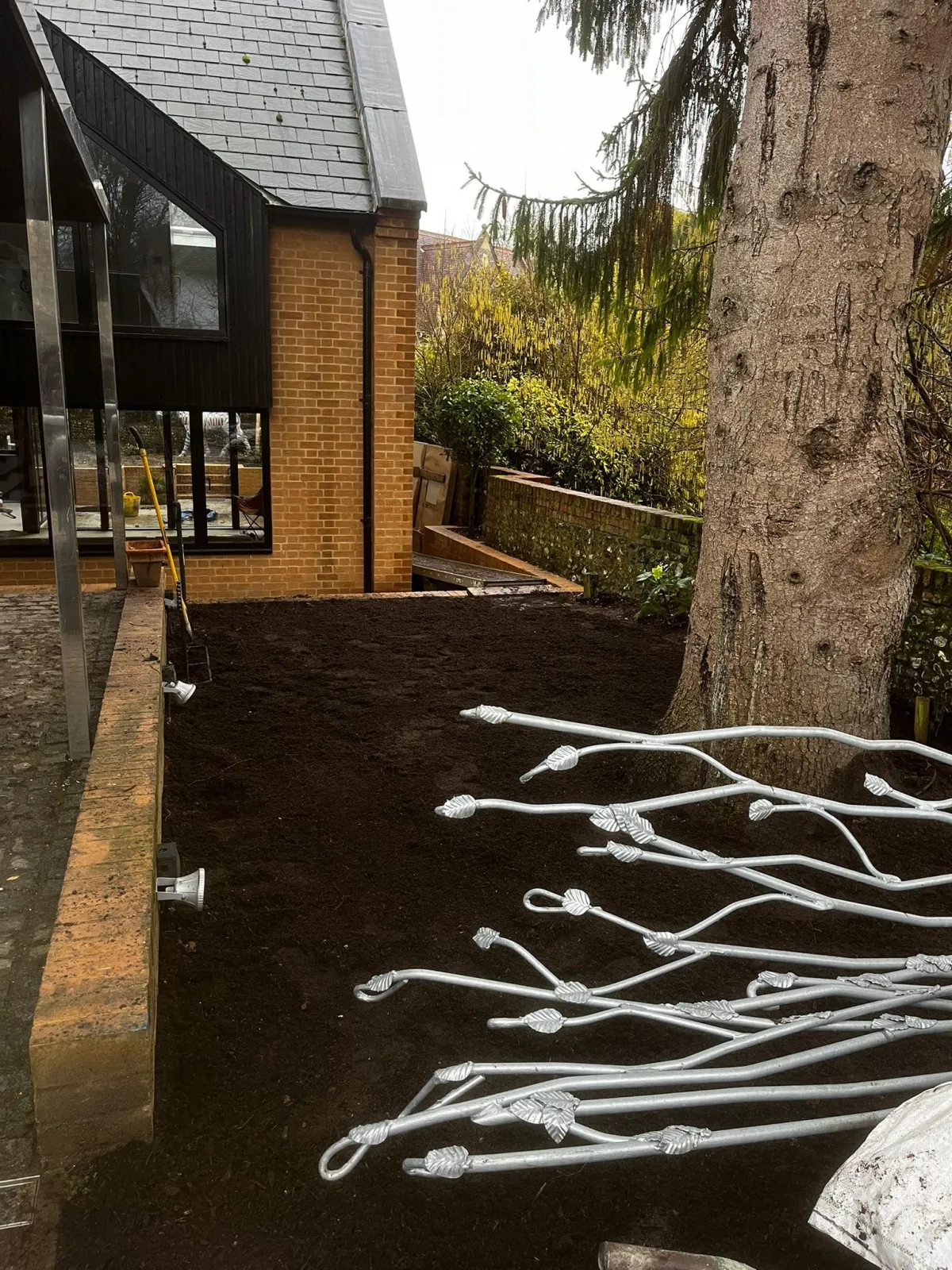
How Our Stone masonry Service Works
Every Stone masonry project starts with the foundation, because this is what determines whether the finished structure holds. Natural stone is heavier and less forgiving of ground movement than block construction, so the footing needs to be specified for the actual load and the soil conditions at the site. In Southampton, ground conditions vary significantly. A stone wall or pier on heavier, wetter soil in a lower lying part of the city near the river corridors needs a deeper, more substantial foundation than the same structure on freer draining ground in an elevated suburb. Edens Edge landscaping holds Level 3 construction qualifications and assesses the ground at every site before specifying the foundation.
Where a stonemasonry structure is retaining soil, even a low feature such as a raised bed wall or a small terrace edge, drainage behind the stone is built in as standard. Saturated soil pressing against the back of a stone wall is significantly heavier than dry soil, and without somewhere for that water to go, the pressure builds against the structure through every wet season. Edens Edge landscaping includes drainage aggregate behind any retaining stonework so the structure is not carrying a load it was never designed for.
Stone selection and bonding pattern are chosen to suit the property and the application. Different stone types vary in how they weather, how they take mortar, and how they should be set to bear load correctly. A coping stone on top of a wall needs to shed water away from the joint beneath it. A pier needs stones bonded in a pattern that ties the structure together rather than simply stacked. Steps need each tread set level and securely bedded so the structure does not move under repeated foot traffic. Edens Edge landscaping works through these decisions for each specific project rather than applying the same approach regardless of the application.
Pointing is finished to keep water out of the joints rather than just to look neat on the day of completion. In Southampton's maritime climate, where the wet and dry cycle repeats through the year rather than there being a single hard frost period, joints that allow water ingress deteriorate progressively through repeated cycles of wetting and drying. Edens Edge landscaping finishes pointing to a standard that sheds water rather than holding it, which is the detail that determines whether stonework needs attention again within a few years or holds for decades.
FAQ's
Frequent Asked Questions
Common questions about Stone masonry from Edens Edge landscaping, covering Southampton and surrounding areas.
What types of stonemasonry work do you carry out?
Edens Edge landscaping carries out natural stone walls, piers, boundary features, steps and coping as part of garden projects across Southampton. This includes new construction, rebuilding existing features that have deteriorated, and additions designed to match existing stone or brickwork on a property. Every project starts with an assessment of the ground conditions and the load the structure needs to carry, because that determines the foundation specification, which Edens Edge landscaping holds Level 3 construction qualifications to get right.
Why has my stone wall started leaning or losing its joints?
This is almost always a foundation or drainage issue rather than something that can be fixed by repointing alone. Natural stone relies on the foundation beneath it and the mortar bond between stones to stay in position. If the foundation was inadequate for the soil conditions, or if there is no drainage behind a retaining section of stonework, the structure absorbs movement from the ground or pressure from saturated soil over time. In lower lying parts of Southampton near the river corridors, where the ground can stay saturated for extended periods through winter, this process happens faster. Edens Edge landscaping assesses the foundation before recommending whether repair or rebuilding is the right approach.
Can you rebuild an old or deteriorated stone feature in my garden?
Yes. Rebuilding existing stonework that was either never built to modern foundation standards, or has deteriorated over years of movement, is a regular part of the work across Southampton's older properties. The process involves removing the deteriorated structure, assessing why it failed, and rebuilding on a foundation specified for the ground conditions at that site. Where possible, existing stone can often be reused in the rebuild, which keeps the character of the original feature while giving it the structural foundation it never had.
Does drainage matter for a stone wall that is not very tall?
Yes, regardless of height. Any stonework that is retaining soil, even a low raised bed wall or terrace edge, is under load from the soil behind it, and saturated soil is significantly heavier than dry soil. Without drainage behind the structure to release that water pressure, even a low wall is carrying more load than it was designed for through every wet season. Edens Edge landscaping includes drainage aggregate behind any retaining stonework as standard, regardless of the height of the structure.
Are you insured and do you have a cancellation policy?
Edens Edge landscaping holds £5m public liability insurance. If you need to cancel a booked job, the cancellation policy allows a full refund with three days notice. For any questions about bookings or to get a quote for Stone masonry in Southampton, call 07850412717 directly.
Get in touch
Get Your Stonemasonry Quote Today
Edens Edge landscaping covers Southampton, Romsey, Winchester and the surrounding areas. [CLIENT TO CONFIRM: response time or booking window]
Edens Edge landscaping
Professional landscaping in Chandlers Ford
Unit 4, Riverside Court, Cupar KY15 5JY, United Kingdom
Quick Links
Service areas
Opening Hours
Mon - Fri
8am – 6pm
Saturday
9am – 4pm
Sunday
Closed
© 2026 Edens Edge landscaping. All rights reserved.
Privacy Policy
Terms & Conditions